
Hiking to the Sky: Your Complete Guide to Barr Trail & Barr Camp
Every visitor to Manitou Springs has heard of the Incline. Most know about the Cog Railway. But ask a local how to really experience Pikes Peak—slowly, on foot, through the forest and above the treeline—and they'll point you toward Barr Trail. A 13.3-mile path that climbs from the edge of town all the way to the 14,115-foot summit, it's one of Colorado's most storied alpine routes. And hidden at its halfway point, at 10,200 feet, is a place most visitors never find: Barr Camp.
Barr Camp is part history, part mountain refuge, and entirely irreplaceable. It's the kind of place that makes you feel like you've stepped into a different era of Colorado—one where people earned their summits the hard way and the mountains demanded respect. Here's everything you need to know before you lace up and head out from our front door.
The Man Who Built a Mountain Trail by Hand
Fred Barr arrived in Manitou Springs in the early 1900s with a vision: a hiking trail to the summit of Pikes Peak that ordinary people could follow. What followed was one of the most remarkable single-person construction projects in Colorado history. Starting around 1914, Barr spent years clearing brush, blasting rock, and laying trail by hand through terrain that ranged from dense Engelmann spruce forest to exposed granite tundra above 12,000 feet. He completed the first through-route in 1921 and opened Barr Camp as a rest stop and overnight shelter in 1920. The trail and camp still carry his name, and the route he cut is essentially unchanged more than a century later.
The Outrider Tip
The trailhead for Barr Trail is at the Manitou Incline trailhead on Ruxton Avenue—about a half-mile walk west from our lobby. No car needed. Grab a coffee from our lobby hangout, warm up with the walk along Ruxton, and you're on trail before most people are out of bed.
The Lower Section: Forest, Creek & Switchbacks
Trailhead to the Incline Junction (0–2.5 miles)
Barr Trail begins at roughly 6,600 feet and immediately enters a cool ponderosa pine and Douglas fir forest. The first two miles follow a series of well-graded switchbacks, climbing steadily but never brutally, with Ruxton Creek audible below. You'll pass the junction with the Manitou Incline descent route—a flat, marked crossing—and continue into deeper forest. The trail here is wide and well-maintained, shared with early-morning runners who use it as a warm-up loop. On weekday mornings before 9am, you may have the lower trail almost entirely to yourself.
Through the Aspen Zone (2.5–4.5 miles)
Above 8,000 feet, ponderosa gives way to stands of aspen and Engelmann spruce, and the views begin to open southward toward the Cheyenne Mountain ridgeline. The trail narrows slightly and the grade steepens. You'll pass through a series of broad switchbacks known locally as "The W's," where the trail crosses the same slope multiple times at slightly higher elevation with each pass. This section rewards the patient hiker: the light through the aspens in early morning is extraordinary, and the air is noticeably cooler and cleaner than in town below.
The Outrider Tip
Bring more water than you think you need. The first reliable water source is a spring near Barr Camp at mile 6.5—there's nothing potable before that. In summer, carry at least two liters from the trailhead and plan to refill at the camp.
Barr Camp: The Hidden Gem at 10,200 Feet
At mile 6.5, after roughly 3,600 feet of climbing, the trees part and a cluster of historic log structures appears in a clearing: Barr Camp. Built by Fred Barr in 1920 and operated continuously ever since, the camp sits at 10,200 feet in a natural sheltered bowl below treeline, surrounded by Engelmann spruce and occasional elk. It's one of the oldest continuously operating mountain camps in Colorado, and one of the least known outside the hiking community.
What's at Camp
Barr Camp is run by a small team of volunteer caretakers who live at the camp seasonally. The main cabin—a hand-hewn log structure with a wood stove, rough-hewn tables, and walls covered in decades of summit photos—serves as both a warming hut and a simple café. In season (roughly Memorial Day through Labor Day), caretakers sell simple hot meals: oatmeal and coffee in the morning, chili and hot cocoa in the afternoon. It's not a restaurant—it's a mountain kitchen operating on propane and goodwill—and every bowl of chili tastes like the best you've ever had after 3,600 feet of climbing.
The camp also offers tent camping on a small cleared pad just below the cabin, and a lean-to shelter for self-sufficient overnighters. Reservations are required for camping and can be made through the Barr Camp website. Staying overnight opens up an entirely different dimension of the experience: the summit attempt at first light, the silence of a high-altitude forest after dark, the view of the Milky Way unobstructed by any light source for thirty miles.
The Outrider Tip
Even if you're not summiting, Barr Camp is worth the climb. The 13-mile round-trip to camp and back is a full-day adventure that gives you the authentic Pikes Peak trail experience without the altitude demands of the full 14er. Most fit hikers can do it in 6–8 hours total, with a 30-minute break at camp.
Beyond Barr Camp: The Summit Push
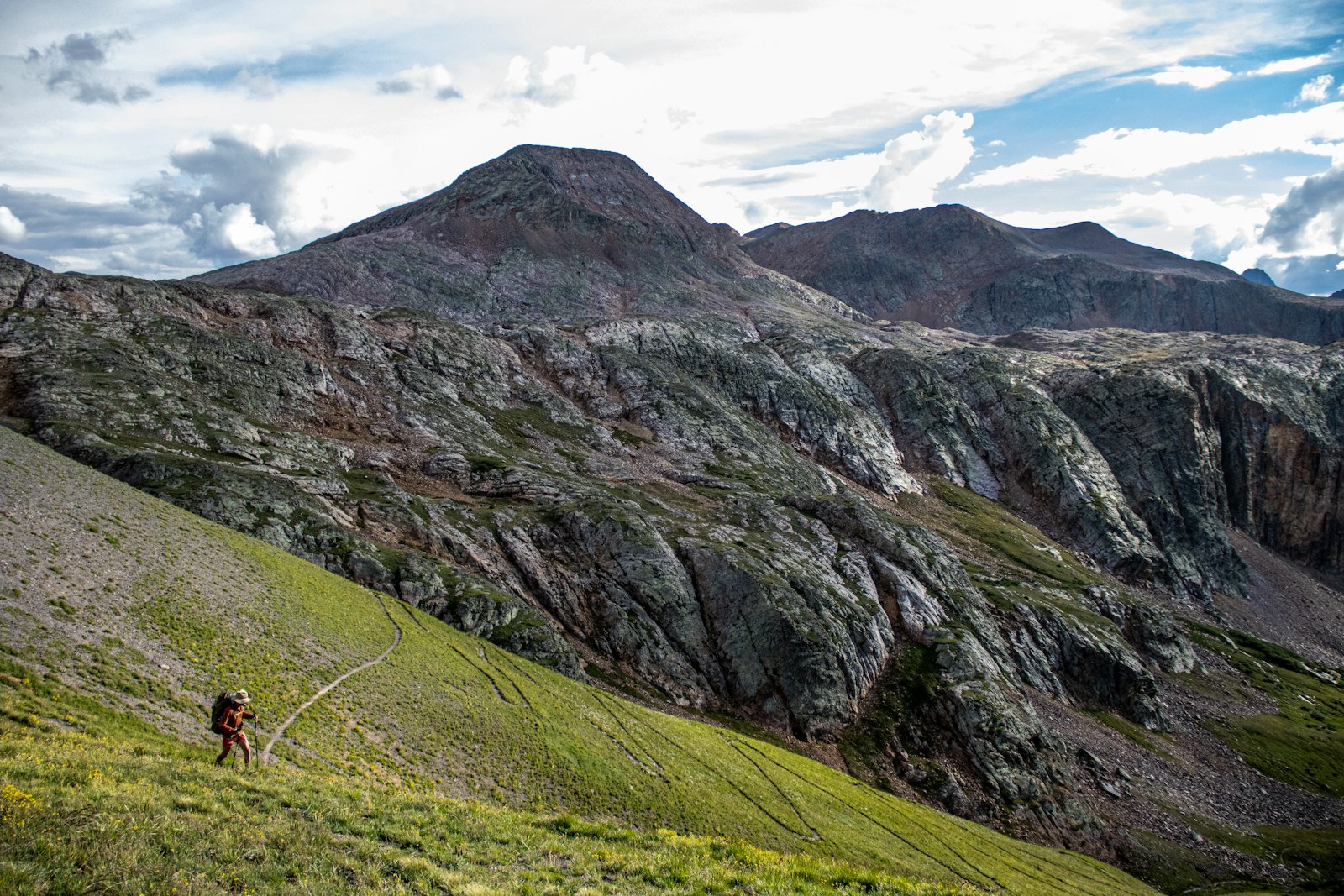
From Barr Camp, it's another 6.8 miles and nearly 4,000 feet of elevation gain to the 14,115-foot summit of Pikes Peak. This upper section is where the trail earns its full reputation. You'll break above treeline around mile 9, where the landscape shifts dramatically from sheltered spruce forest to open alpine tundra. Above 12,000 feet, the air is noticeably thin, the wind is constant, and the views stretch from the Kansas plains to the east to the Sawatch Range to the west—on clear days, well over 100 miles in every direction.
The final two miles of the Barr Trail trace a ridgeline called 'The Sixteen Golden Stairs'—a series of steep stone switchbacks approaching the summit cairn. The summit itself is shared with the Cog Railway crowd and the Pikes Peak Highway drivers, but arriving on foot gives you a perspective no vehicle can provide. The famous summit donuts taste different when you've climbed every one of those 7,500 feet to reach them.
Day Hike Options for Every Fitness Level
The Lower Loop (4–5 miles, Easy–Moderate)
For a scenic, low-commitment option, hike Barr Trail to the Incline junction and return the same way—or complete a loop by descending the Barr Trail after coming down the Incline. This route covers the most photogenic lower section of the trail with minimal elevation commitment and brings you back to town in time for a late breakfast.
Barr Camp Day Hike (13 miles round-trip, Strenuous)
The most popular full-day hike is Barr Camp and back: 13 miles with 3,600 feet of gain in each direction. Plan 6–8 hours, start by 7am, and carry emergency layers even in summer—conditions above 10,000 feet can change quickly. The reward is genuine: a hot meal at Barr Camp, a view that earns its name, and the quiet satisfaction of earning the mountain with your own effort.
The Full Summit Attempt (26.6 miles round-trip, Expert)
Summiting Pikes Peak via Barr Trail and returning the same day is a 26.6-mile, 7,500-foot-gain undertaking that demands serious preparation, an alpine start (3–4am from the trailhead), and genuine high-altitude fitness. Most hikers attempting the round trip plan at least one overnight at Barr Camp. Alternatively, the trail can be combined with a one-way summit and return via the Cog Railway or a shuttle on the Pikes Peak Highway.
The Outrider Tip
Planning a summit attempt? Talk to us at the front desk the evening before. We keep current trail conditions from other guests and local sources, can suggest gear rentals and shuttle options in town, and make sure you're leaving with enough food and water. Starting a 14er without current conditions info is a gamble not worth taking.
Practical Information
The Barr Trail trailhead is at the Manitou Incline trailhead on Ruxton Avenue—a 10-minute walk from The Outrider. Parking near the trailhead is limited and competitive on summer weekends; we strongly recommend walking from the hotel. There is no fee to hike Barr Trail or enter the trailhead. The trail is open year-round, though snow above 9,000 feet is common from October through May and microspikes or snowshoes may be necessary in winter months. Cell coverage becomes unreliable above the lower switchbacks; download offline maps before your hike. The Manitou Incline Trailhead has a vault toilet but no water—fill up at the hotel before you leave.
Barr Trail is at altitude from step one. Even the trailhead sits at 6,600 feet, and Barr Camp at 10,200 feet means a full day at elevations that can cause headaches, fatigue, or mild altitude sickness in visitors arriving from sea level. Give yourself at least a night in Manitou Springs before your big hike—your legs and lungs will perform better for it. Our hotel sits at 6,400 feet, and even a single night at altitude begins the acclimatization process.
The Outrider Tip
After a full day on Barr Trail, our wellness area is exactly what your body needs. A session in the sauna opens up the muscles compressed by hours of descent. Follow it with a cold plunge to reduce inflammation, and you'll wake up the next morning without the quad soreness that usually defines the day after a big hike. Book your slot before you leave for the trail.