
How to Plan a Winter Retreat in Colorado (Without Booking a Conference Hotel)
Every retreat host eventually faces the same venue problem. The big mountain resorts want 100-room minimums and conference-center energy. The Airbnb mansion sleeps twelve people in bunk beds and puts your keynote in someone's living room. And the city hotel — well, nobody drove to Colorado to do breathwork next to an elevator bank. If you host retreats for a living, or you're the one organizing your company's annual planning offsite, the venue is the highest-stakes decision you'll make. It sets the tone before you say a word.
Here's the case for a different approach: a small boutique property, in winter, in the mountains — specifically the kind of intimate 10-to-40-person gathering where everyone knows everyone by the second morning. Winter is when Colorado's retreat math flips in your favor, and small properties are where retreats stop feeling like conferences.
Why Winter Is the Smart Season for Retreats
Summer in the Pikes Peak region is spectacular and completely booked. Winter is spectacular and quiet — and that quiet is exactly what most retreats are trying to manufacture. Trails you'd share with hundreds of people in July are nearly empty in January. Availability opens up for the dates you actually want, including full-property buyouts that are nearly impossible to secure in peak season. And there's a deeper alignment: the calendar itself does half your programming. December suits digital detoxes, holiday team gatherings, and end-of-year reflection. January is annual planning season — goal setting, company kickoffs, New Year wellness resets. February brings Galentine's weekends, self-care retreats, couples getaways, and the masterminds that want to start the year with momentum. Your attendees are already primed for the theme; winter just gives it a landscape.
One practical note: Colorado winter is milder than its reputation. Manitou Springs sits at about 6,300 feet — not a ski-town altitude — and winter days here are frequently sunny and hikeable. The steam rising off a hot tub on a 35-degree evening is a feature, not a hardship.
Small Venue vs. Conference Hotel: What Actually Changes
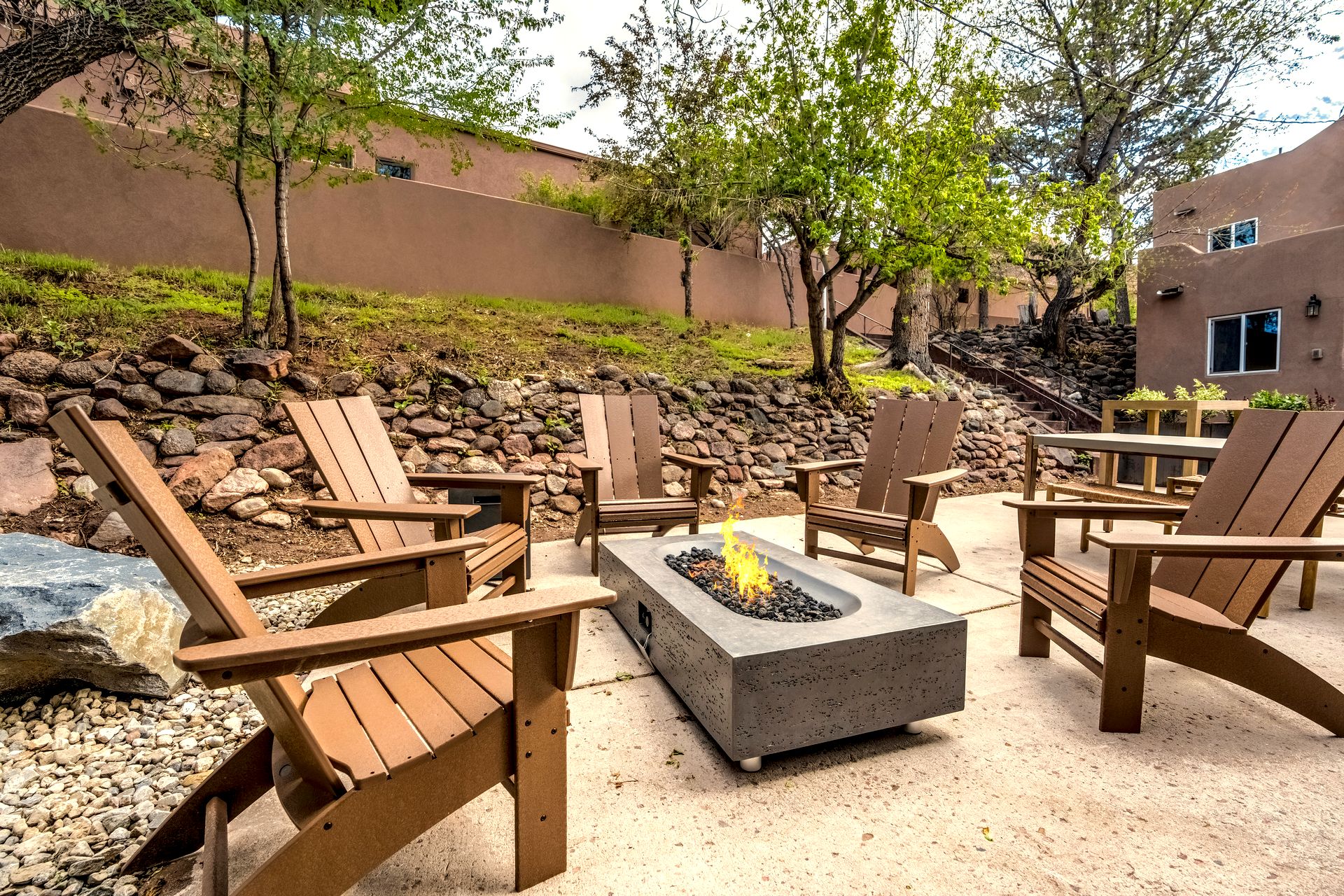
The conference hotel gives you a ballroom, a projector, and 400 strangers in the lobby. The small property gives you the whole place. When your group of 25 books most — or all — of a 39-room boutique hotel, the property becomes yours. The fire pit is your evening session. The lobby is your morning circle. Nobody badges in. The conversations that actually change people — the 10pm ones, the walk-to-breakfast ones — happen because there's nowhere else to be and no one else around. That's not something you can rent by the ballroom-hour.
Be clear-eyed about the trade-off: a boutique property is not a conference center. The Outrider, for example, doesn't have a dedicated meeting room — sessions happen in shared spaces like the lounge, the patio, and around the fire, and for structured classroom-style workshops we point hosts to venues in walking distance in Manitou Springs. For most retreats of 10 to 40 people, that trade is the entire point. If your agenda needs eight hours of projector time, book the conference hotel. If your agenda needs people to actually talk to each other, don't.
A Sample Two-Night Winter Retreat Agenda
Day one: attendees arrive through the afternoon, check in, and settle. Welcome gifts in rooms do more than you'd think — they tell people someone prepared for them. Gather at the fire pit before dinner; walk into downtown Manitou for the meal. Keep the first night light. Day two is your core content: a morning session in the lounge, an afternoon built around movement — a Garden of the Gods hike works for nearly every fitness level, three minutes away — then sauna and cold plunge sessions before a fireside evening conversation, which will run long because the good ones always do. Day three: one closing session, commitments, and a checkout that doesn't feel rushed. Two nights is the honest minimum; three lets people exhale.
The Outrider Tip
If you host retreats more than once a year, ask venues about recurring-host arrangements before you book. At The Outrider we give returning hosts priority on their annual dates, custom booking links so attendees reserve their own rooms, and one dedicated contact from first call to checkout. Locking in your dates a year out is the single biggest stress-reducer in retreat planning.
Explore Retreats & OffsitesLogistics Your Attendees Will Ask About
Getting here is easier than most out-of-state hosts expect. Colorado Springs Airport (COS) is about 30 minutes away with direct flights from major hubs, and Denver International adds a scenic 90-minute drive for attendees with more flight options. Groups fly in comfortably from Dallas, Austin, Phoenix, Nashville, Kansas City — anywhere a two-hour flight reaches. Once here, nobody needs a car: downtown Manitou Springs is walkable from the hotel, and the marquee landscapes are minutes away. Altitude deserves one honest mention — 6,300 feet is gentle compared to ski country, but encourage attendees to hydrate on day one and schedule the hardest hike for day two.
The last piece of advice is the simplest: decide what you want people to feel when they leave, and work backwards. Every venue question — how big, how remote, how structured — answers itself once you know whether you're building rest, clarity, connection, or all three. Winter in the mountains happens to be very good at all three.